There are more language learning resources available right now than at any point in human history. Apps, podcasts, YouTube channels, structured courses, tutors, textbooks, immersion programs — the options are overwhelming. And somehow, with all that abundance, most people still plateau after a few months and quietly give up.
The problem isn’t access. It’s that different resources build different skills, and most learners use only one type. Here’s an honest breakdown of what’s actually out there — and what each one does well.
Apps Are Great for Starting — and Not Much Else
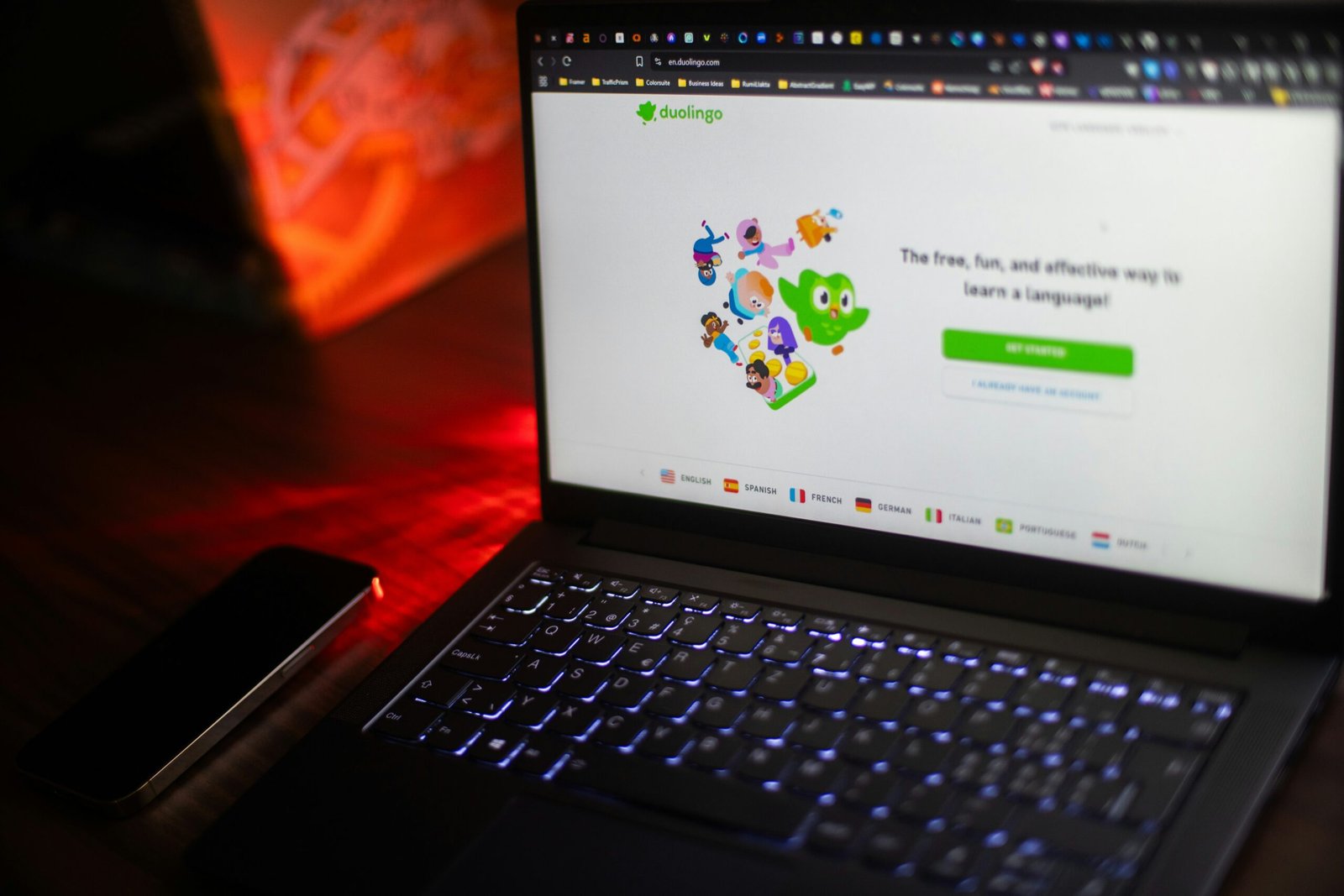
Duolingo, Babbel, Pimsleur, and their competitors are genuinely good at one thing: getting you off zero. They’re low-friction, gamified, and they make it easy to build a daily habit. If you use them consistently for sixty days, you’ll pick up several hundred words and a basic feel for how the language sounds. That’s real progress.
The limitation is that apps are designed to keep you engaged, not to make you fluent. The exercises are highly scaffolded — the app is basically doing most of the cognitive work for you. You match words, you tap tiles, you repeat short phrases. At some point, you need to do harder things: form your own sentences, follow fast speech, have a conversation where the other person doesn’t wait for you.
Use apps to build daily momentum, especially in the first few months. Don’t expect them to carry you past the beginner stage.
Textbooks Still Work — If You Use Them Actively
A good textbook gives you something apps usually don’t: a systematic, logical progression through grammar and vocabulary. If you want to understand why a sentence is structured the way it is, a textbook explains it. If you want to know what you don’t know yet, a textbook shows you the road map.
The risk with textbooks is passive reading. You can feel productive while learning almost nothing. A textbook only works if you’re writing out sentences, completing exercises by hand, and testing yourself on what you’ve just read before moving to the next chapter. Treat it like a workbook, not a novel.
For most major languages, the Assimil series and university-level courses like Colloquial are well-regarded. For Japanese and Korean, Genki and Talk to Me in Korean respectively have become standards for good reason.
Tutors Give You the Thing Apps and Books Can’t
The most important skill in a language is using it with another person under time pressure. There is no simulation for that. You can be surprisingly functional in reading and writing, and then completely freeze when a real human talks to you at normal speed, uses slang, and doesn’t wait for you to catch up.
A tutor — or an informal conversation partner through platforms like iTalki or Tandem — forces you to produce language on the spot. It’s uncomfortable at first, and that discomfort is exactly what creates progress. Your brain has to retrieve vocabulary quickly, self-correct in real time, and learn to communicate through its gaps. None of that happens in an app.
Tutoring sessions don’t have to be expensive or formal. Even one hour a week of unscripted conversation will accelerate your progress more than several hours of passive app use.
Comprehensible Input Is One of the Best-Kept Secrets
Comprehensible input means listening to or reading content in your target language that’s just slightly above your current level. The theory, developed by linguist Stephen Krashen, is that you acquire language naturally by understanding messages — not by drilling grammar rules.
In practice, this means finding podcasts, YouTube channels, or shows made for learners at your level. The Language Transfer audio courses are free and excellent. Coffee Break Languages and Dreaming Spanish are useful for their respective languages. The goal is massive exposure to real language used in context, not just vocabulary drills.
The catch: this approach requires patience. You won’t understand much at first, and the temptation is to give up or retreat to something easier. Stick with it. The comprehension builds over time, and when it does, you’ll find that you’re not translating in your head — you’re just understanding.
Flashcard Systems Work for Vocabulary, Full Stop
Anki and similar spaced repetition systems (SRS) are the most efficient known method for memorizing vocabulary. They show you a card right before you’d forget it, forcing retrieval — which is exactly what cements a memory. A well-maintained Anki deck, reviewed for 15 minutes a day, will build your vocabulary faster than almost any other technique.
The caveat: Anki is for retention, not acquisition. You need to encounter a word in context before you can memorize it. Use input methods to meet new words, then use Anki to make them stick.
What This Means for You
No single resource will take you from beginner to fluent. The learners who make real progress are the ones who use multiple types of resources together: an app for daily habit, a textbook or structured course for grammar, a tutor for real conversation, and some form of comprehensible input for listening. Add a spaced repetition system once your vocabulary list starts growing.
You don’t need the best resources. You need a combination of resources that keeps you engaged, covers your weak spots, and — above all — gets you using the language. That last part is the one no resource can do for you.