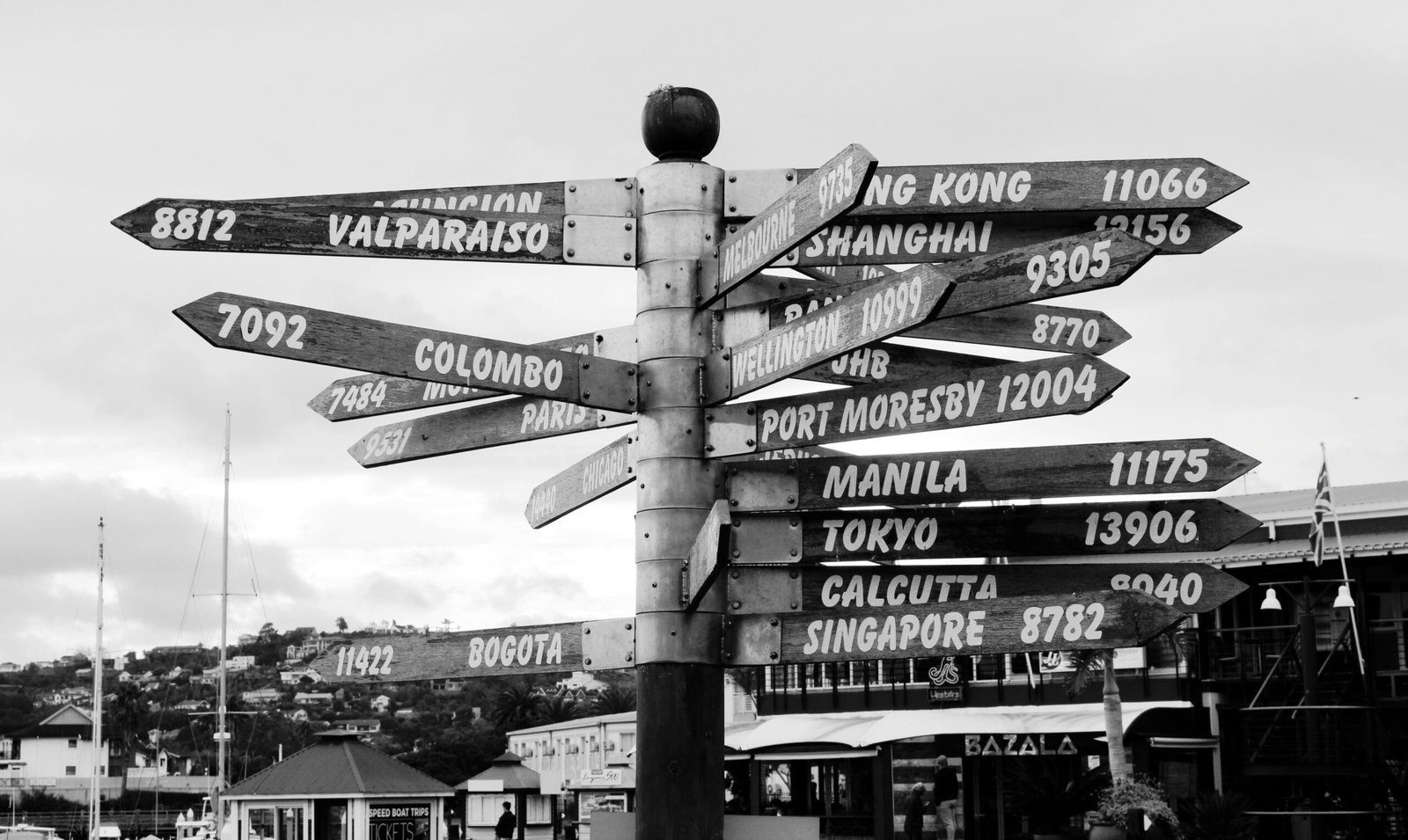
Right now, without leaving your chair, you could describe a meal you had in 2014, explain what you plan to do next Thursday, or tell someone about a conversation that happened in a city you’ve never visited. None of those things are here. None of them are now. And yet you can talk about all of them with complete fluency.
That ability has a name. Linguists call it displacement, and it’s one of the defining features that separates human language from every other communication system we know of.
What Displacement Means
Displacement is the capacity to use language to refer to things that are removed from the current time and place — the past, the future, distant locations, imaginary situations, and things that don’t exist at all.
You can describe your grandmother’s kitchen in a house that was demolished twenty years ago. You can speculate about what Mars might look like at sunrise. You can argue about the plot of a novel, discuss a historical battle, or make plans for a vacation you might never take. All of this requires the ability to mentally detach language from the immediate here-and-now.
This sounds completely ordinary because you’ve done it every day of your life. But from a biological and evolutionary standpoint, it’s extraordinary.
How Animal Communication Differs
Most animal communication is tied to the present moment. A dog barking at the door is responding to something happening right now. A bird’s alarm call signals current danger. A chimpanzee’s food call announces food that is present and accessible.
When the stimulus disappears, the communication stops. Animals don’t typically come back to the den later and say “remember that hawk from this morning? We should talk about our response strategy.” The signal and the situation it describes are locked together in time.
There are partial exceptions. Honeybee waggle dances are the most famous: a bee returning from a food source performs a dance that communicates the direction and approximate distance of that source to other bees. The food isn’t in the hive — the dance refers to something at a remove. Some researchers consider this a limited form of displacement.
But even the waggle dance is constrained. Bees can’t use it to discuss yesterday’s flowers, plan for next season, or invent a description of something entirely imaginary. The displacement is real but narrow.
Why Displacement Matters
Displacement is what makes planning possible. Without it, language could only describe what’s in front of you. With it, language becomes a tool for coordinating action across time — warning each other about past dangers, making arrangements for future events, teaching skills through description rather than only demonstration.
It’s also what makes storytelling possible. Fiction, history, mythology, instruction, memory — all of these depend on the ability to use language to conjure something that isn’t present. A culture without displacement could not preserve its past, imagine its future, or pass knowledge across generations except through direct observation.
That’s a significant constraint. Most of what human culture is — law, science, religion, literature, education — depends on our ability to talk about things that aren’t in the room.
The Role of Grammar
Displacement isn’t just an abstract capacity. It’s built into the structure of language through grammar. Tense is the most obvious example: the grammatical marking of past, present, and future forces speakers to locate events in time every time they say a sentence. You can’t describe an action in English without (implicitly or explicitly) placing it in time.
Other grammatical tools extend displacement further: conditionals for hypotheticals (“if we had left earlier”), modals for possibilities (“it might rain tomorrow”), evidentials in some languages for flagging the source of information (“I heard that the road is closed”). These are all grammatical mechanisms that let speakers precisely calibrate their distance from the here-and-now.
Languages vary in how elaborately they encode these distinctions — some have many more tenses than English, some have fewer — but the underlying capacity for displacement is universal. Every human language has the tools to talk about what isn’t present.
What This Means for You
Every time you reminisce, plan, speculate, imagine, or worry, you’re using displacement. Every novel you’ve read, every history class you sat through, every vacation you’ve planned on a spreadsheet — all of it ran on this one feature of language.
It’s easy to take for granted precisely because it’s so built into how we think. But displacement is part of what makes humans unusual among living things. We’re not just communicating about the world as it currently appears to us. We’re communicating about a world that extends backward and forward in time, across space, and into the realm of things that have never existed at all.
That’s a strange and powerful thing for a communication system to be able to do. It’s worth noticing.