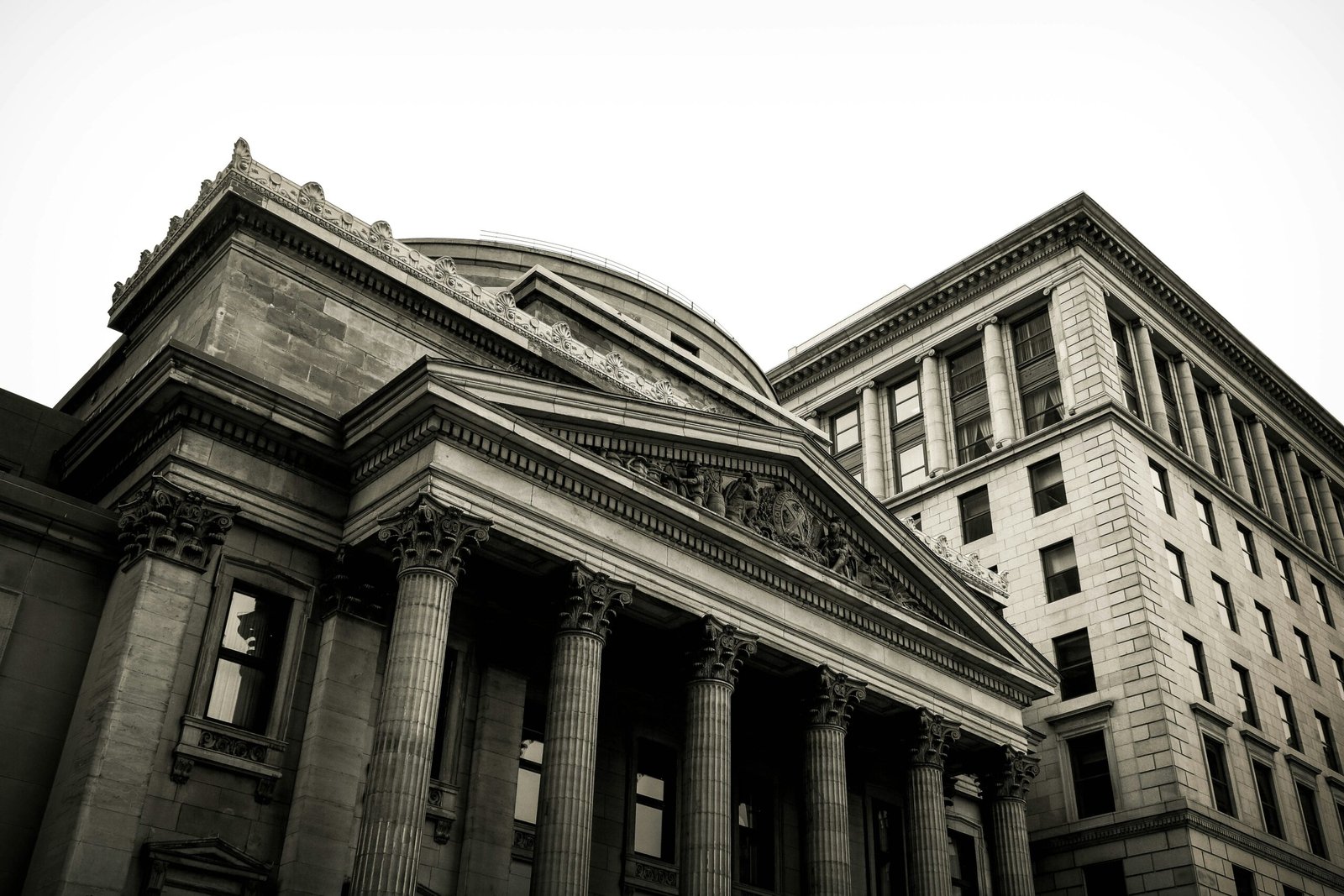
You know what the word “bank” means. Except — do you? It could be a financial institution, the edge of a river, or a verb meaning to tilt an aircraft. Context resolves the ambiguity instantly, most of the time, without you noticing. That effortless resolution of meaning is exactly what semantics tries to explain.
Semantics is the branch of linguistics that studies meaning: how words carry it, how sentences assemble it, and how speakers use it to communicate more than they literally say. It’s one of the deepest and most philosophically rich areas of language study, and it touches everything from dictionary definitions to courtroom arguments about what a contract actually says.
Sentence Meaning vs. Speaker Meaning
One of the first distinctions semantics draws is between what a sentence means and what a speaker means by it. These are often the same thing — but not always.
If someone asks “Can you pass the salt?” the sentence meaning is a question about your physical capability. The speaker meaning is a polite request. Nobody hands over the salt and says, “Yes, I can” while leaving the shaker in place. We automatically interpret the intended message, not just the literal words.
Sentence meaning is stable and context-independent — it’s what the sentence means in the language system, regardless of who says it or when. Speaker meaning is what a particular person intends to communicate in a particular moment. Semantics focuses primarily on sentence meaning; the study of speaker meaning and context slides into a related field called pragmatics. But the boundary between them is blurry and endlessly interesting.
Sense and Reference: Frege’s Distinction
The philosopher Gottlob Frege drew a distinction in the late nineteenth century that linguists still rely on today. He noticed that two expressions can refer to the same thing in the world while having completely different meanings.
“The morning star” and “the evening star” both refer to Venus. But they don’t mean the same thing — they pick out the object via different descriptions. Frege called the object that an expression points to its reference, and the way it picks out that object — the concept or description it carries — its sense.
This matters because language doesn’t just point at things. It describes them, categorizes them, and frames them. Two sentences can be “about” the same event while saying very different things, because the sense — the angle of approach — differs.
Truth Conditions
Another core tool in semantics is the concept of truth conditions: the set of circumstances under which a sentence would be true. To know the meaning of “It’s raining” is to know what the world would have to look like for that sentence to be true. You don’t need it to actually be raining. You just need to understand the conditions.
This approach, rooted in formal logic, gives semanticists a precise way to analyze meaning. If two sentences have exactly the same truth conditions — if they’re true in all the same situations — they’re semantically equivalent. This can reveal hidden relationships between sentences that look very different on the surface.
Semantic Fields and How Words Relate
Words don’t exist in isolation; they exist in relation to other words. Semantics uses the concept of a semantic field to describe clusters of words that cover the same domain of meaning. The semantic field of color includes red, blue, green, scarlet, turquoise, and hundreds of others. The field of cooking includes boil, simmer, sauté, roast, braise.
Within and across semantic fields, words relate to each other in systematic ways. Synonyms are words with the same or very similar meanings (begin/start, big/large). Antonyms are opposites (hot/cold, tall/short — though even antonymy comes in different types). Hyponyms are words that are a specific kind of a more general category: robin is a hyponym of bird, which is itself a hyponym of animal. These hierarchical relationships structure the vocabulary of every language.
The Compositionality Principle
One of the most powerful ideas in semantics is the principle of compositionality: the meaning of a sentence is built systematically from the meanings of its parts and the rules for combining them.
This is why language is so productive. You can understand a sentence you’ve never heard before — “The purple giraffe demolished the saxophone” — because you know the individual words and the grammatical structure. You don’t need to have encountered that exact combination. The meaning assembles.
Compositionality doesn’t explain everything. Idioms like “kick the bucket” or “break a leg” aren’t compositional — you can’t build their meanings from the parts. But for the vast majority of language, the principle holds, and it explains how finite vocabulary generates infinite sentences.
If you want to go deeper into these ideas, Meaning: A Guide to Semantics (Oxford Linguistics) is one of the most accessible serious treatments available. It covers the full range — from sense and reference through truth conditions and beyond — without requiring a philosophy degree to follow.
What This Means for You
Semantics isn’t abstract theory for its own sake. Every time a politician says their statement was “taken out of context,” every time a contract dispute hinges on what “reasonable effort” means, every time you feel that a translation missed something — semantics is at work.
Understanding that meaning operates on multiple levels (sentence vs. speaker, sense vs. reference, literal vs. idiomatic) makes you a more careful reader, a more precise writer, and a harder target for language that is technically accurate but deliberately misleading. Words are not neutral labels. They’re structured, relational, and contextual — and knowing that changes how you use them.
Disclosure: This article contains affiliate links. If you purchase through one of our links, we may earn a small commission at no extra cost to you.