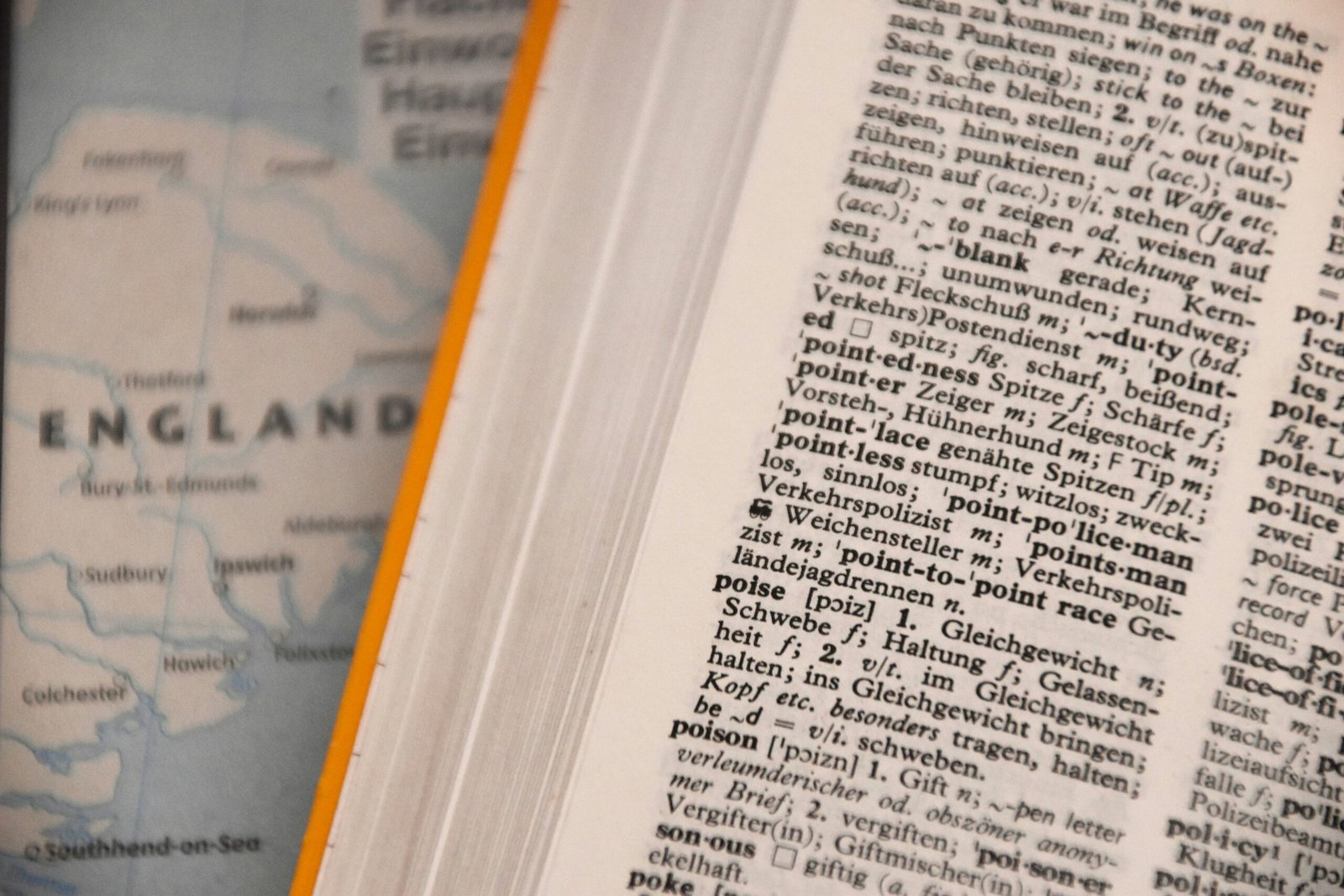
If translation were simple, you’d just swap each word for its equivalent in another language and be done. A dictionary, a little patience, and you’re finished. But anyone who has tried this — even with a modern AI assistant — knows that the output often reads like something assembled by a very confident robot that has never met a human. Technically correct. Profoundly wrong.
Translation is hard, and the reason it’s hard gets at something deep about what language actually is.
Words Don’t Have One-to-One Equivalents
The most obvious problem is that languages don’t carve up reality the same way. Every language has words that simply don’t exist in other languages — concepts so specific to a culture that there’s no clean swap.
Portuguese has saudade, a kind of melancholic longing for something or someone you may never have or see again. Japanese has 木漏れ日 (komorebi), the interplay of light and leaves when sunlight filters through trees. Danish has hygge, a quality of cozy, convivial warmth that is more of a feeling than a thing.
You can describe these words in English. But you can’t translate them — not in a single word, not without losing something. And these aren’t rare exceptions. Every language is full of them.
Grammar Carries Meaning That Disappears in Translation
Languages encode different information at the level of grammar itself. Some languages require speakers to specify whether they witnessed something directly or heard it secondhand — this is called evidentiality, and it’s baked into the verb form. In Turkish, there are grammatically distinct verb endings for “I saw it happen” and “I was told it happened.” In English, we make that distinction with optional phrases if we bother at all.
Gender is another example. In French, Spanish, German, and dozens of other languages, every noun has a grammatical gender. Research suggests this subtly shapes how speakers think about the objects those words refer to. When you translate a French sentence into English, you shed that gender information entirely. Sometimes it doesn’t matter. Sometimes it changes the feel of a sentence in ways that are hard to pin down.
Aspect is a further complication. Russian distinguishes between an action that was completed and one that was ongoing in the past — in ways that English handles only loosely, through context and adverbs. The translator must choose, and every choice is an interpretation.
Tone and Register Are Invisible in Dictionaries
The same sentence can be warm or cold, formal or casual, sincere or sarcastic — and translation has to carry all of that, not just the propositional content. In Japanese, the level of formality encoded in verb forms and vocabulary choices tells you a great deal about the relationship between speaker and listener. Strip that into flat English and the social texture evaporates.
Consider the difference between “I regret to inform you” and “I’m sorry to say” and “Look, I’ve got bad news.” All three can translate the same foreign sentence depending on who’s talking to whom and in what context. A register mismatch — using formal language where casual was intended, or vice versa — can make a translated document feel off in ways the reader can’t quite name but definitely feels.
Idioms Are Built for One Language and Break in Another
Idioms are the landmines of translation. Every language has them: phrases whose meaning bears no relationship to the individual words. If you translate “raining cats and dogs” literally into another language, you get nonsense. If you replace it with that language’s own rain idiom, you’ve changed the texture of the original. If you translate it as “raining very hard,” you’ve lost the color entirely.
Skilled translators face this choice constantly: foreignization (keeping something that sounds a little strange because it came from somewhere else) or domestication (swapping in a native equivalent that fits naturally but erases the origin). Neither choice is wrong. Both lose something different.
Context Extends Beyond the Sentence
A translator working on a novel isn’t just handling sentences — they’re handling a character’s voice, a historical moment, a cultural setting, and an implied relationship with a reader who doesn’t share the original audience’s background. Translating a nineteenth-century Russian novel for a contemporary English-speaking reader means making dozens of decisions about what to explain, what to leave mysterious, and what to quietly update so the text doesn’t collapse under the weight of its own foreignness.
Literary translation is sometimes called creative writing with constraints. The constraints are real and demanding. The creative work is also real.
What This Means for You
If you’ve ever run a foreign text through a translation app and felt like something was missing — it was. Machine translation has improved enormously, but it operates primarily at the word and sentence level. It has a limited grasp of register, cultural context, and the choices a skilled human makes about what a text is actually trying to do.
That doesn’t mean machine translation is useless. For getting the gist of a menu or a sign, it’s excellent. For understanding the emotional and cultural weight of a poem, a speech, or a novel, there’s still no substitute for a human being who has lived deeply in both languages.
Translation is hard because language isn’t a code. It’s a system that grew out of a culture, and cultures don’t map neatly onto each other. Every translation is a negotiation between two worlds.